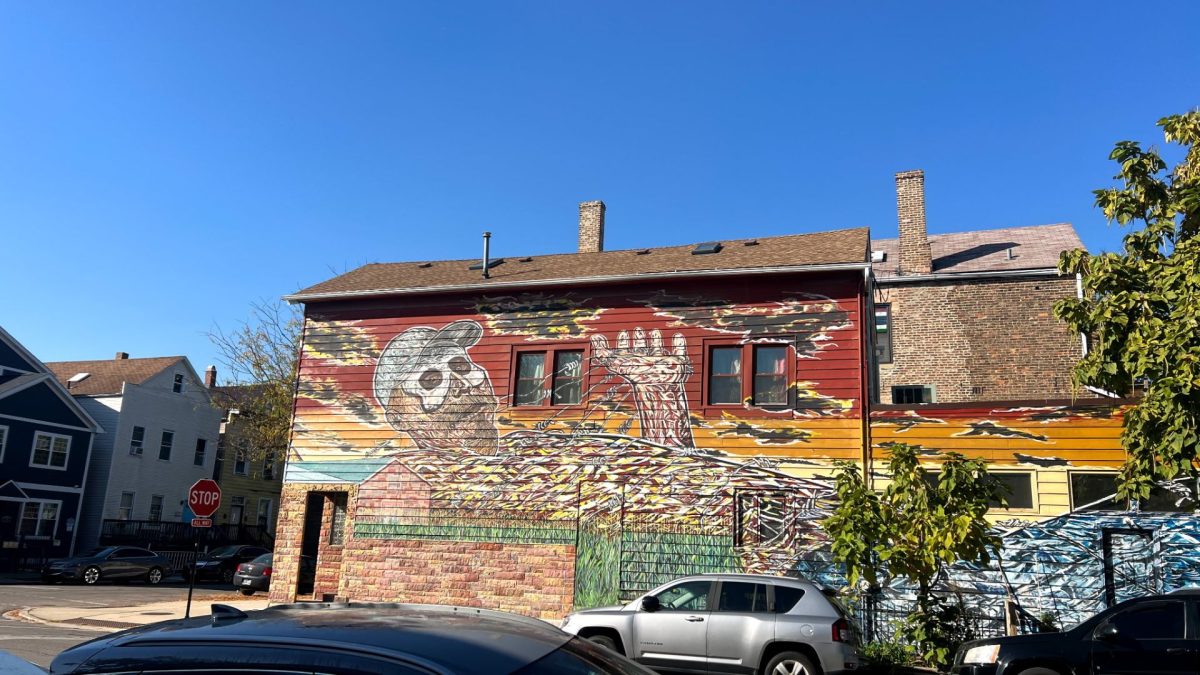





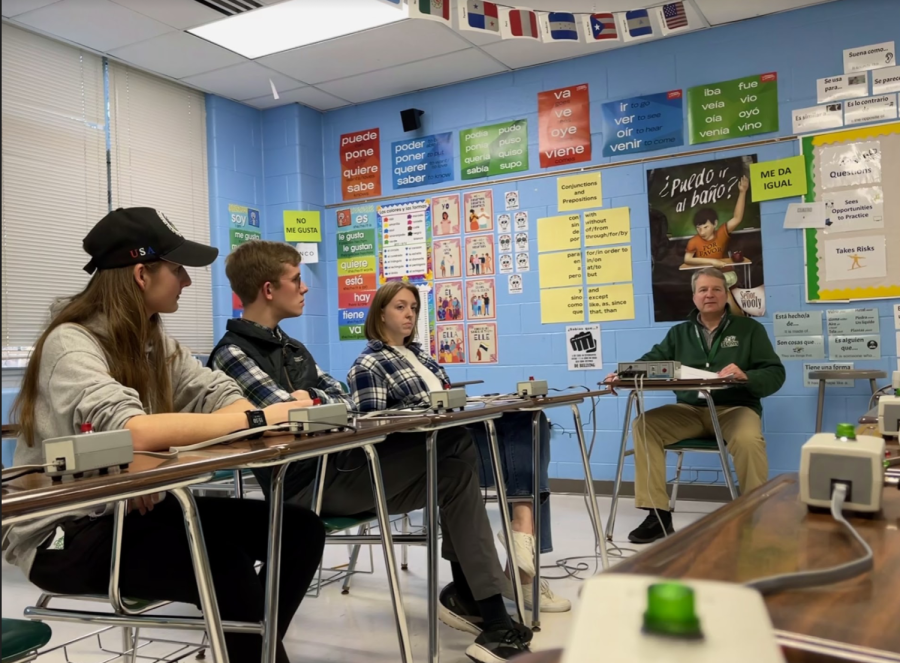







Students from Ms. Erica Johnson’s Spanish III Honors class walk up to a wall decorated with a sea of swirling colors, displaying a mural of a man being tied down with barbed wire. They stand in front of Mexican-American artist Hector Duarte’s painting, “Gulliver en el País de las Maravillas,” that uses the artist’s house as the canvas, telling the story of a man crossing the border into the United States.
This is one of the many murals and art pieces that GCHS Spanish students saw on their field trip to Pilsen, Chicago, IL. Johnson and other Spanish teachers take their students to see these murals and the National Museum of Mexican Art as part of their curriculum because it is an opportunity to educate them about Hispanic culture beyond the walls of the classroom. Johnson believes it’s important for the students to go on the trip, and said she “[thinks] it is impactful for them to see it in person, to see the size of it, to see the scope of it as there are so many in such a small area.”
Johnson said that the Pilsen neighborhood had originally been inhabited by German, Polish, and Czech groups, and that eventually those groups moved out of the area, and it became a predominantly Mexican neighborhood in the 1960s. In the ‘60s it was transformed into a flourishing art scene by the Chicano Art Movement. Sophomore student Julia Osis said the murals resulting from this movement were interesting because “in Grayslake, we don’t really have murals, we don’t really have street art, and that’s a whole genre that is new to me.” According to the essay “The Political and Social Contexts of Chicano Art” by art historian Shifra M. Goldman, the Chicano Art Movement was started by Mexican-American artists to express their culture, history, struggles, and community. It aimed to defy stereotypes and establish a unique artistic identity for Mexican-American artists.
The artist Hector Duarte, who painted the “Gulliver en el País de Maravillas”, stated in an interview with Chicago Public Art Blog that it “[symbolizes] that if we, the community, help [the man depicted in the photo], he can integrate into the community. But if the community doesn’t, he won’t. He’ll fall.” Duarte also said that the man wears a mask and cap to represent the working class as well as the death of his Mexican identity. Osis wondered “why he decided to paint his whole house and how long it took him,” saying it was interesting to see all of the detail that went into the piece despite the large size.
Many students said the murals and art they saw left messages with them about the community and culture. Sophomore student Dharnay Fernandez said “It’s so important for people to be educated on immigration” and said that “every generation sees the world differently now.” Art provides a beautiful insight into the stories spanning generations, ones we cannot represent with words. As many of Grayslake Central students have unique culture and heritage, it’s important to make each one feel recognized and appreciated. Sophomore student Stefani Rivera said that the trip to Pilsen made her feel like it was “good to be Mexican.” She felt “so appreciated that day,” as her heritage was well represented.
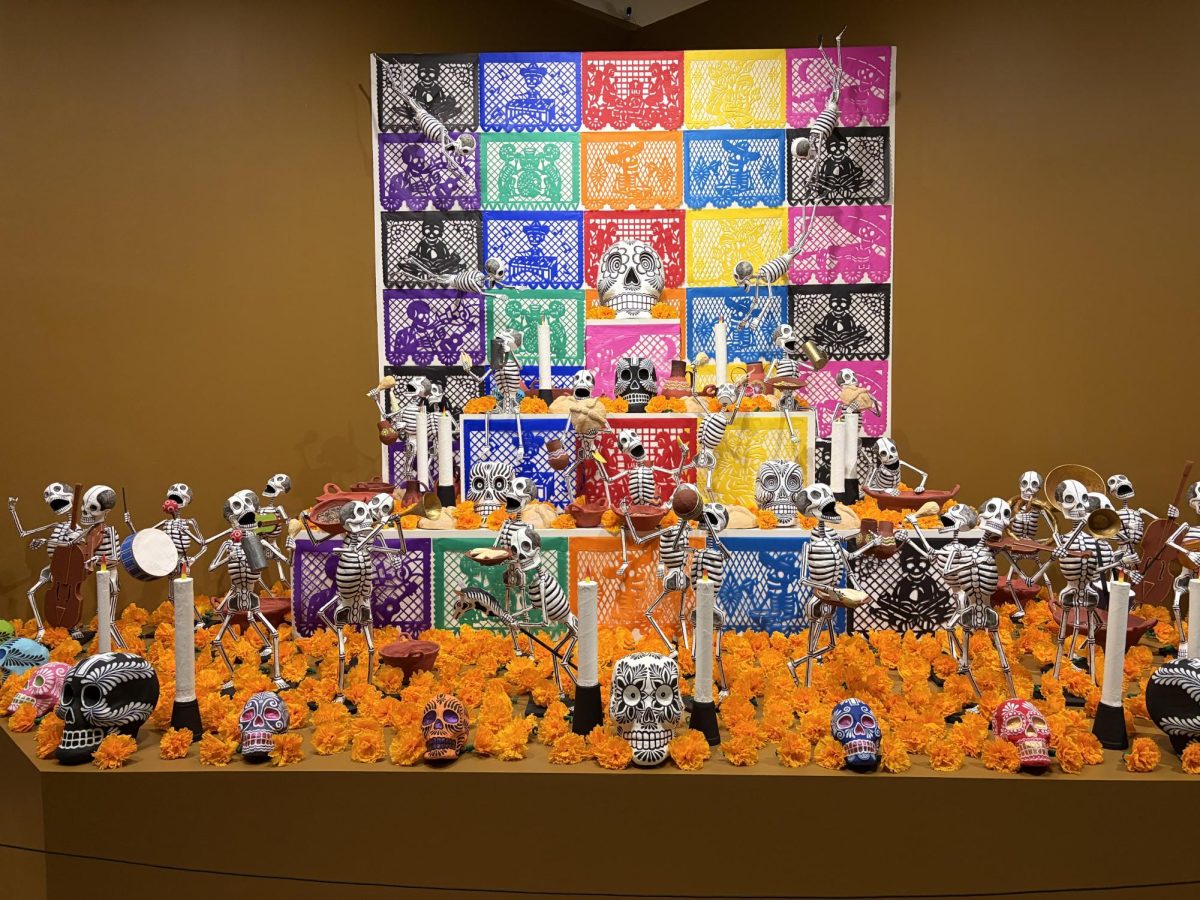
Grayslake Central’s World Language department emphasizes the cultural importance of their students beyond field trips like this one. Back at school, students put that cultural understanding into practice by building a multi-tiered ofrenda, thoughtfully decorating it with marigolds, papel picado, and photos of loved ones. Ms. Missy Dodge, a Spanish teacher at Grayslake Central, organizes and creates the ofrenda every year in front of the cafeteria where staff and students can put up pictures of lost loved ones they would like to celebrate for Dia de los Muertos.
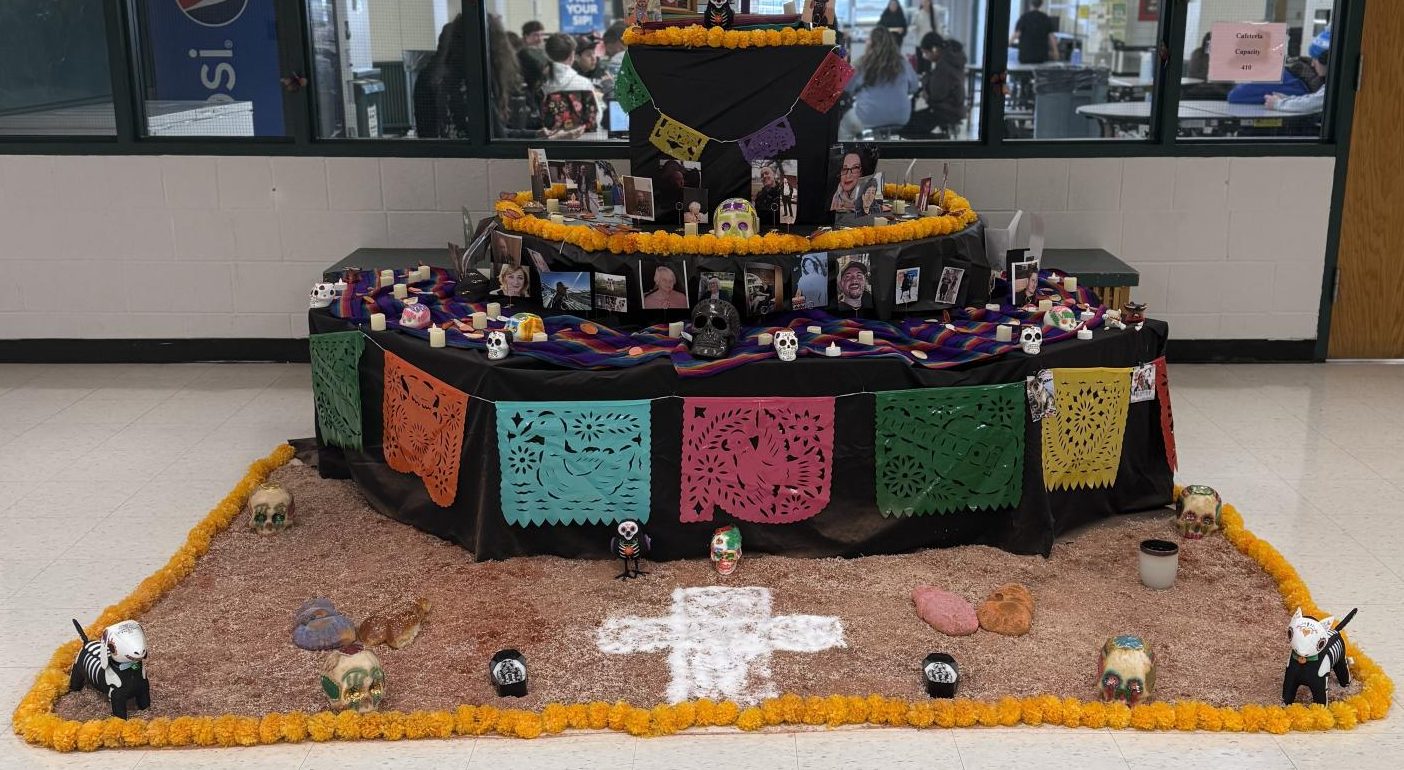
Students on the Spanish field trip said they loved the colors and numerous depictions of nature in the art, and many commented on being impacted by the ofrendas they saw at the museum. It acts as an offering to those who have passed away, leaving gifts like bread, flowers, sugar skulls, photos of the deceased and personal items specific to the people on the ofrenda. Dharnay Fernandez said the ofrendas are “a connection with them after they die, symbolizing that [those who created the ofrenda] still remember [them], and [they’re] still here with us.”
Another student from the class, freshman Jade Diaz-Gomez, said “[The trip] taught me these struggles and the experiences that they had, that they felt and the urge to express themselves with creativity.”