



![“[I love to photograph volleyball] because I play it myself and I like how fast-paced it is. It’s very action based," said Tanner Hering.](https://rampage.d127.org/wp-content/uploads/2026/05/Screenshot-2026-05-13-212955.png)









In March of 2026, Swedish popstar Zara Larsson, who’s recently risen to fame in the aftermath of opening for Tate McRae’s Miss Possessive World Tour and her feature on the remix of PinkPantheress’ “Stateside,” featured during Olympian Alysa Liu’s 2026 figure skating performance, found herself in some hot water after fans discovered her reposting a video from the controversial AI-generated “Fruit Love Island” series. The backlash quickly prompted her to delete the repost and clarify that “she doesn’t use [AI] for her art [and] she doesn’t use it to create.” While fans have begun to move on from the controversy, the reaction began to raise questions across the internet regarding what we’re actually looking for in media personalities and influencers, and if what they give us can be considered enough.
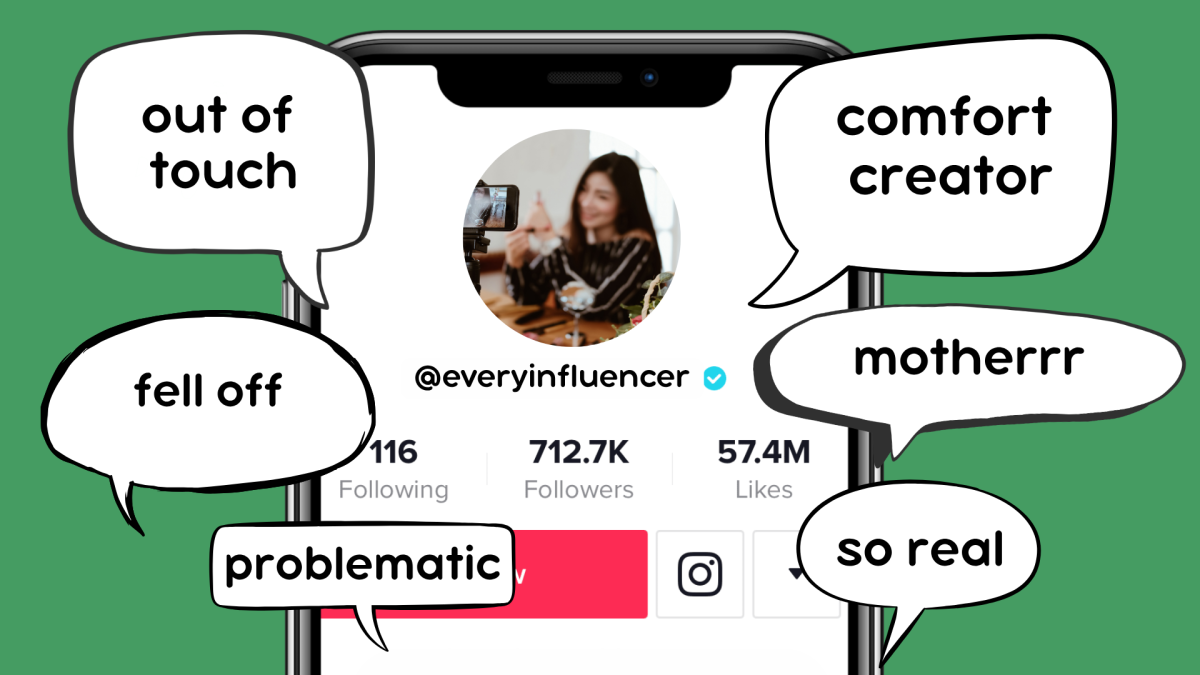
Gen-Z’s relationship with influencers reads less like casual entertainment and more like a messy, on-and-off-again talking stage. On apps like Tiktok and Instagram, influencers are constantly being aestheticized, picked apart, defended, and dropped. Recently, it feels as if the process occurs within the same week. One moment, the internet is overjoyed over discovering a new comfort creator; the next, they’re being dragged in comment sections for being “out of touch” or “inauthentic.” Influencers like Emma Chamberlain built their appeal on relatability, while others such as German model Nara Smith thrive on hyper-polished aspirational content, but Gen Z expects both from everyone with no in-betweens. This has proven to be an unstable dynamic built on contradiction. Viewers want influencers who look effortlessly real, yet still appear perfectly put together all at once.
[I think] there is a negative side to social media,” said Emily Butner, a sophomore at Prairie Ridge High School in Crystal Lake, IL, who’s involved in many online fandoms from F1 to the Avatar: The Last Airbender. Butner said that the internet can be “a toxic place because [all] you can see all these people who have seemingly ‘perfect’ lives,” especially for teenagers. After years of scrolling through hyper-edited content, there’s a growing craving for something more real: less filtered skin, more transparency, fewer undisclosed sponsorships barely disguised as daily life. But when influencers actually deliver that by showing messy rooms, emotional spirals, or taboo opinions, this can cause the audience to become swiftly uncomfortable, critical, and dismissive. While Gen Z is highly responsive to authenticity, they still seem to hold creators to unobtainable, aspirational standards, almost making “realness” only be acceptable when it’s seen as a consumable.
This creates a drastic disconnect where Gen Z wants authenticity in theory but struggles with it in practice. Truly messy influencers, those who overshare or often break the illusion of control, often face backlash for being “too much” or even problematic. This makes it harder to distinguish between genuine vulnerability and performance designed to build trust quickly. “I think the [only] reason problematic people get popular is because people mistake [promoting] harmful behaviors for honesty,” said Butner, “which is why [I think] there are two spectrums to this. There’s these people who are actually awful, and people who just play into being problematic for views.” Influencers like Clavicular (also known as Braden Peters) and Liv Schmidt have been able to gain traction in part because they lean into that gray area, presenting themselves as blunt, unfiltered, and “not like other influencers” because they tell the “truth,” all while promoting extreme and dangerous habits such as self-harming (through something referred to as “bone smashing”), disordered eating-habits, and the use of illegal substances like methamphetamine and injection of unregulated peptides to a majority of adolescent and young-adult viewers in a way that blurs the line between concern and spectacle before they know it.
Ultimately, Gen Z’s relationship with influencers isn’t just unstable but structurally contradictory. On platforms like Tiktok and Instagram, influencers are expected to be aspirational enough to admire, but authentic enough to trust, which is unfortunately a balance that cannot be maintained. This tension fuels a never-ending cycle of obsession, critique, and replacement, where creators are constantly built up and broken down by the same never-satisfied audience. It also helps to explain why more controversial figures have risen in popularity in recent years as anything that feels even slightly different can gain traction, even if it comes with consequences. The more Gen Z demands for perfection and authenticity, the harder it will be for influencers to satisfy them.