
















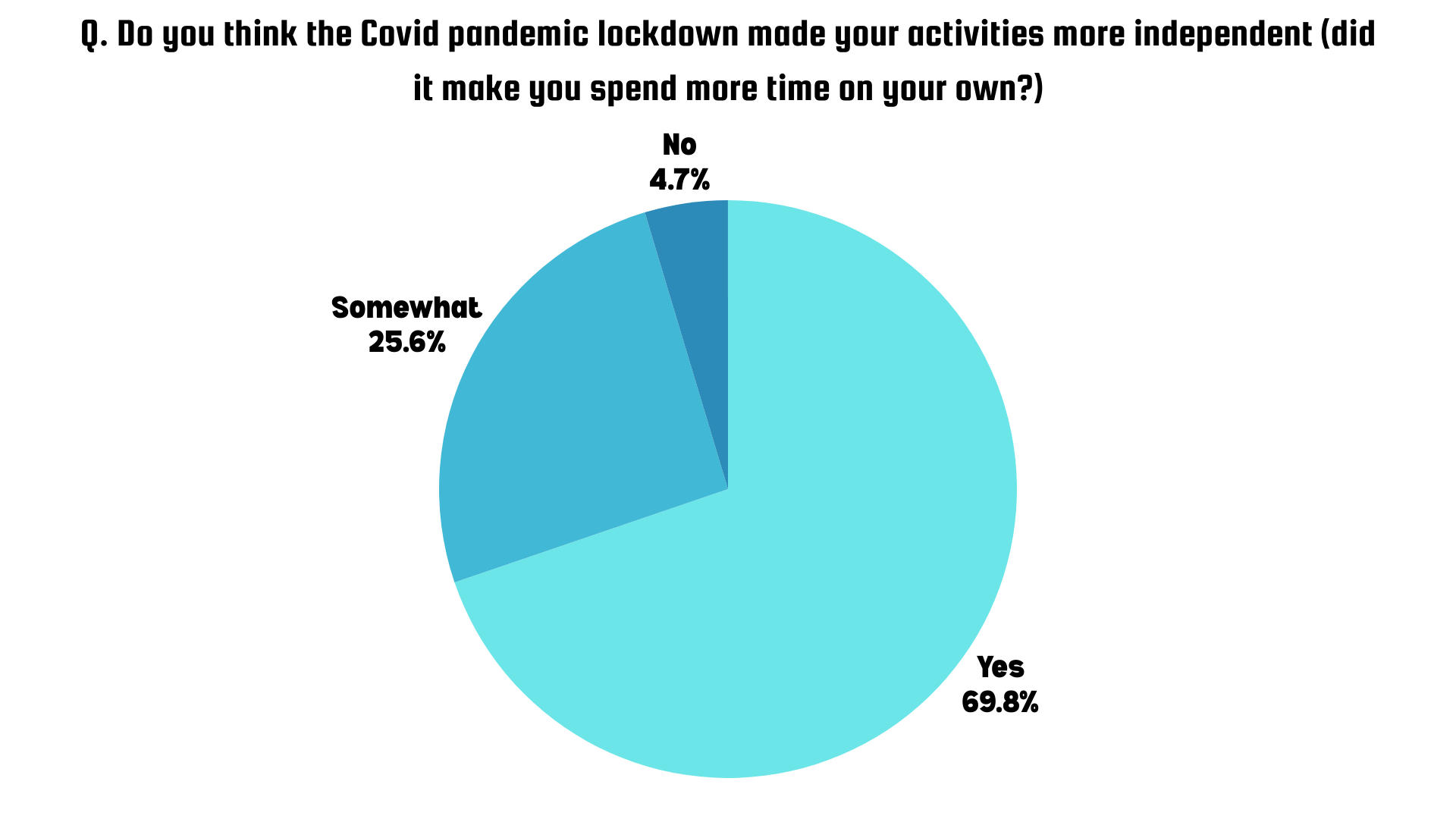
Out of 43 GCHS students surveyed, a surprisingly low 4.7% said that the COVID-19 lockdown did not make their activities more independent.
The COVID-19 lockdown forced people of all age groups to stay inside their homes, quarantining for months in social isolation. Considering the length of both the full and partial lockdown, many opportunities for fun activities, interactions and experiences were eliminated and deeply affected numerous aspects of our daily lives. Naturally, we got used to these major changes. However, did we get too used to these changes? Are our habits from the lockdown still prevalent in our day-to-day lives?
“Socialization and entertainment [were available] at your fingertips, and I think everybody got used to that, and now it’s hard to get back out of that habit,” Danielle Christopherson, an executive functioning specialist at Grayslake Central said. There are many layers to this question along with individual factors. Let’s take a look at the what elements of our daily lives the pandemic impacted most.
Socialization:
When in total lockdown, people weren’t able to spend time with each other in the same way, and when they did spend time together it was socially distanced and less frequent. Even when in partial lockdown, or just when the pandemic had general limits, i.e., social distancing and masks, interactions were limited and therefore reduced. Sophomore Eleny Romo responded to a Rampage poll and said “I feel that COVID made it harder to connect with others, but at the same time it made everyone very close to the people they did talk to during quarantine.” These limitations effected, and still do affect, how we socialize. According to a Rampage’s poll, it is generally agreed amongst GCHS students that the lockdown introduced us to more independent activities. Out of 43 students polled, only 4.7% of respondents say that the lockdown did not make their activities more independent, 25.6% say it made their activities somewhat more independent, and 69.8% say that it did make their activities more independent. A respondent who preferred to remain anonymous stated that more individualistic activities “made me a lot more isolated.”
Free Time and Boredom:
Boredom is a problem that everybody experiences often, even daily. Boredom is manageable as long as it’s not constant, so what happens when it is? Sitting with boredom can absolutely be healthy, but many people developed creative and productive hobbies during the 2020 lockdown. Respondents to a Rampage poll indicated that arts and crafts, learning new languages, creating YouTube and TikTok channels, and making music were just some of the hobbies people picked up. Sophomore Evie Evert said “During Covid I focused a lot on my sport and becoming better at it. I also decided to start reading for pleasure which I loved doing, but stopped after. I later picked up reading again and I was very happy.” Danielle Christopherson said, “My favorite podcaster created his show during the pandemic.” Along with these productive hobbies, there are of course also time-passing habits that give short hits of dopamine. The most common example of this is doomscrolling – scrolling through short videos or reels on TikTok, YouTube Shorts, Instagram Reels, etc. – for long periods of time.
Did These Habits Stick?
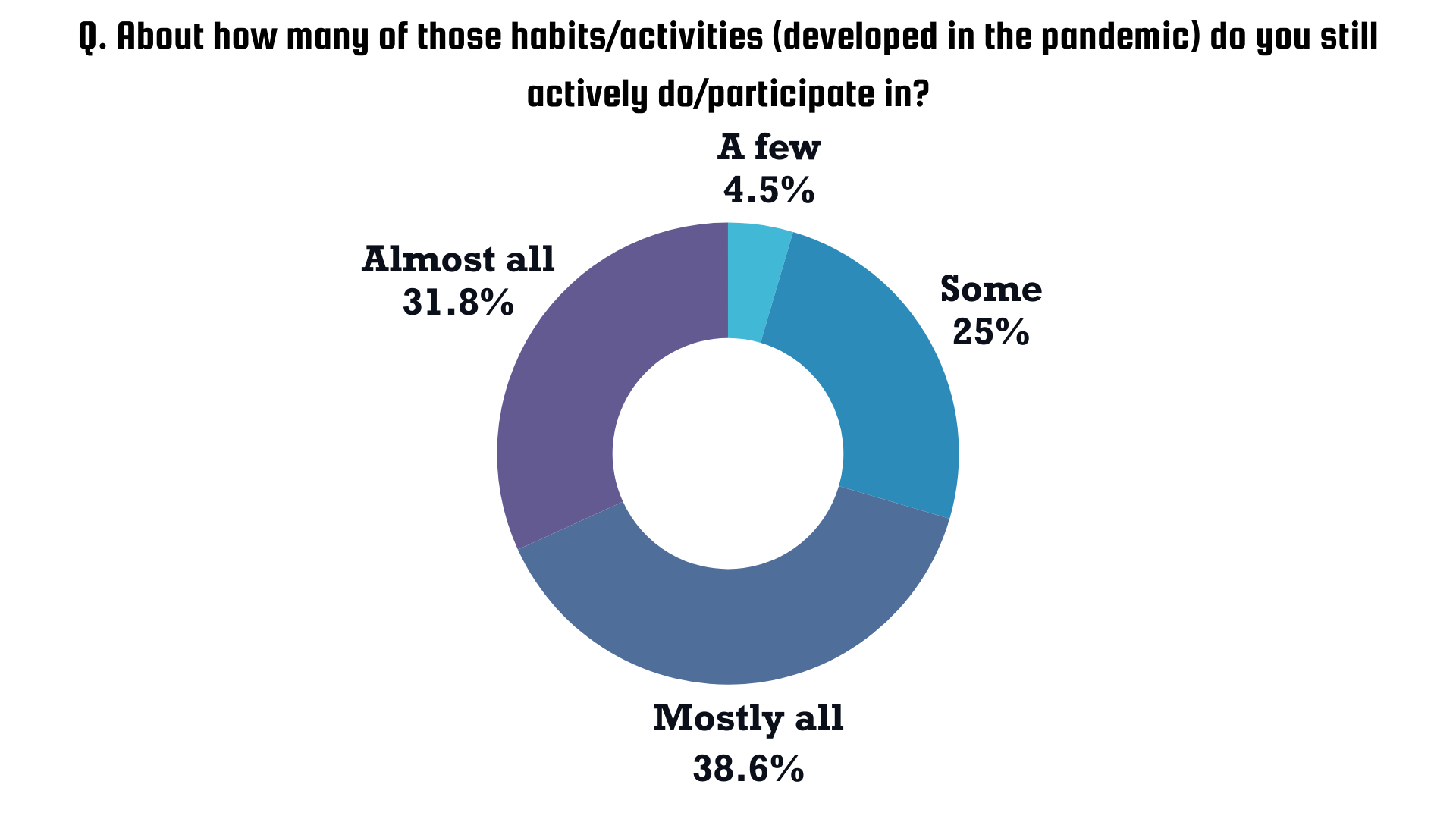
The extent to which these habits/activities are still present are extremely dependent on the person. So many factors play into it such as mental health, household experiences, outside support, and more. Three respondents to Rampage’s poll mentioned that they still participate in the activities they picked up during the pandemic to pass the time. However, on the other side, three respondents also say they are busier now, so they don’t have as much time to do them. However, the most commonly agreed-upon idea is that we still participate in majority of the activities, hobbies, and habits that we developed during the pandemic. Out of 44 students, a combined 70.4% say that they participate in most to all of them, based on a scale of one to five.
Six Years Later: Why is This Important?
This data can help us recognize the benefits and dangers of the changes and effects the COVID-19 pandemic had. The positives that come out of these hobbies sticking is that we definitely found at least a few hobbies that are helpful to have, and that we actually enjoy. “I’ve just gotten too into the games and puzzles I do. It can be calming or even exciting,” sophomore Aubrey Lorentz said in our poll. The dangers of this, though, are that, even if just a decent amount of time was spent doing activities that just passed the time, or gave short hits of dopamine, it could have been enough to cause significant harms to our boredom tolerance. Whether the pandemic had overall positive or negative effects on the ways you spend your free time, it’s important to recognize that even though the lockdown was temporary, its effects were permanent.