













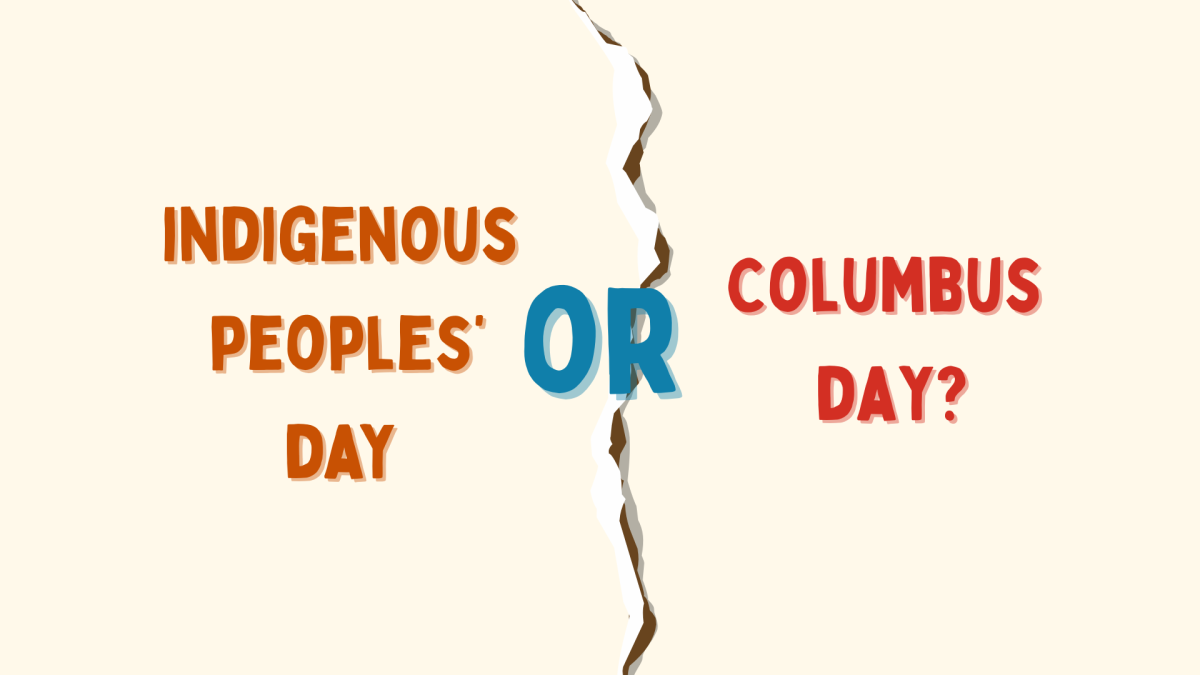
As the saying goes, in 1492 Columbus sailed the ocean blue – or something like that. Columbus Day was established as a federal holiday in the United States in 1937 and stayed that way until 2021 when under President Joe Biden the holiday was changed to honor the indigenous people of America and renamed Indigenous People’s Day.
That was the case until just recently where this holiday made it’s way into the news again. On Oct, 9, 2025 President Donald Trump signed a proclamation to reinstate the holiday as Columbus Day. With this change came much conversation and controversy. Let’s take a deeper look to see what exactly why the changes were made, and how the local Illinois indigenous community feels about the switch.
Christopher Columbus Day started as a way of honoring Columbus’ achievements and the legacy of Italian-Americans. However, many peoples opinions on Columbus began to change as we collectively gained more knowledge on the true nature of his voyages. The first argument is that Columbus didn’t really “find” America due to the fact there had already been natives living in the Americas for hundreds, if not thousands, of years.
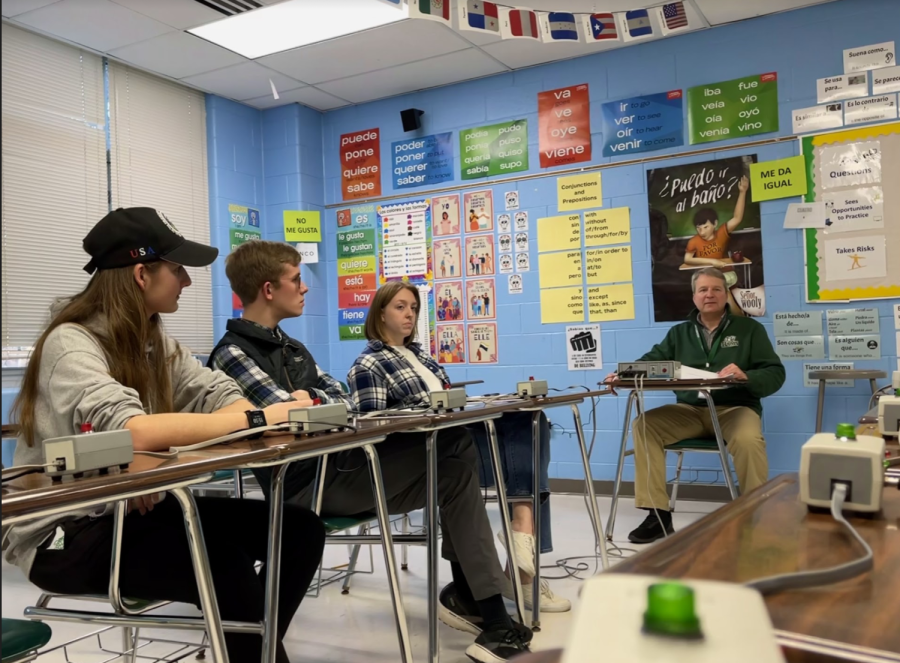
Many Native American groups have protested the holiday, stating that Columbus was the start of a massive death toll of Native Americans due to disease brought from Europe, along with a history of immense violence. Dr. Doreen Wiese, the President of the American Indian Association of Illinois said in an interview with Rampage that, “Columbus never set foot in America,” which could be argued successfully – after all Columbus wasn’t even looking for America. His voyage was intended to sail to China, India, and the Spice Islands.
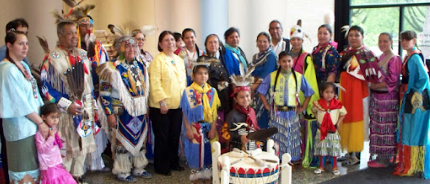
However, Dr. Wiese also commented on the other side of the story. She said, “everyone is indigenous,” implying that this name of the holiday is also unfit. Which begs the question – where do we get a new name for the holiday? It’s important to note that Indigenous People’s Day has been celebrated in several communities since the 1980’s but wasn’t declared a federal holiday until 2021. The name started in the civil rights movement under the Red Power Movement that aimed to shed more light on the Native American community during a time that America was struggling with race and ethnicity, according to Dr. Wiese.
According to a survey of Central students conducted by Rampage via Google form, feelings were mixed. One anonymous reply said “we shouldn’t honor a guy who came and killed hundreds of thousands of people” and “Christopher Columbus did not discover America. Indigenous people were here for years before him.”
Eli Crothers, a student at GCHS, said on the same survey, “I grew up saying Columbus Day and it was normal for me.”
With the continued confusion and controversy surrounding the name of the holiday, it’s important to take not of and respect both points of view.